
Published Last updated
New Construction Home Loans: Financing a Builder Home Without Surprises
Buying from a production builder is a different financing exercise than buying a resale home. The timeline is longer, the rate lock decision matters more, and the incentive math deserves a careful look.
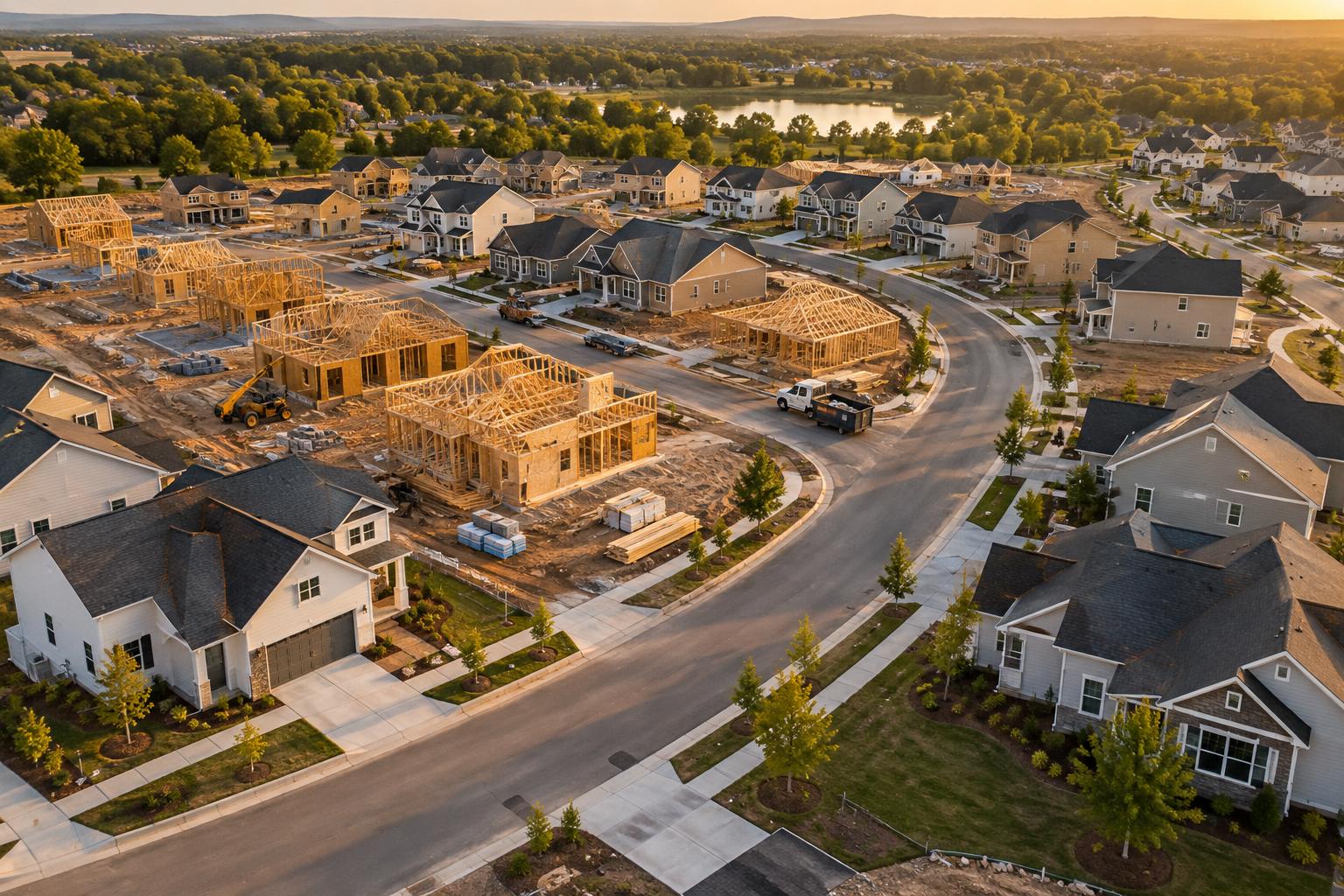
A new construction home loan finances the purchase of a home being built by a builder, with closing occurring at or near completion. Because delivery can be months away, the central issues are rate lock length and cost, whether the builder incentive requires using an affiliated lender, appraisal timing relative to completion, and how contract deposits and delivery delays are handled.
- ✓Closing usually occurs at or near completion, so the lock period is the central financing decision.
- ✓Builder incentives are frequently tied to using an affiliated or preferred lender.
- ✓Appraisals are typically completed before the home is finished, using plans and specifications.
- ✓Deposits and option upgrades are often nonrefundable and are handled differently from resale earnest money.
- ✓Delivery delays are common, so lock extension terms matter.
What this means for you: compare the builder incentive against outside financing on total cost, not on the incentive headline alone.
Pricing snapshot
Live ratesLive pricing. Rates are retrieved from our pricing provider when you run a scenario.New Construction Home Loan Rates — Today's Options at a Glance
Four real options from today's wholesale pricing for one documented sample scenario per program — no form needed. Updated twice each business day, about 10 AM and 2 PM Eastern. Your own rate depends on your credit, down payment, property, state and lock date.
Live pricing tool
Live ratesLive pricing. Rates are retrieved from our pricing provider when you run a scenario.Live New Construction Home Loan Rates
Enter your scenario to see live wholesale pricing for Florida and Colorado. Figures are illustrative and not a quote, lock, offer, or commitment to lend; binding figures appear on your Loan Estimate.
Conventional loan pricing tool
Live ratesLive pricing. Rates are retrieved from our pricing provider when you run a scenario.Conforming conventional first-mortgage pricing, with optional temporary buydown. Every figure shown comes from our pricing provider for the scenario you enter — nothing is estimated.
Pricing shown is based on the scenario entered and wholesale pricing available at the time of the search. It is not a rate lock, loan approval, commitment to lend, or guarantee of terms. Rates and pricing change frequently and expire. Your actual rate, APR, payment, and costs depend on a complete application, verified credit and income, property and appraisal review, and lender underwriting approval. Binding figures appear on your Loan Estimate. Payment shown is principal and interest only and excludes taxes, insurance and mortgage insurance. Simply Approved Mortgages LLC · NMLS# 2620881 · Equal Housing Opportunity.
Written by
Simply Approved Mortgages Team
Licensed Loan Officers · NMLS# 2620881
Get your personalized scenario summary
Complete the short request and a Simply Approved Mortgages Loan Officer sends back a written summary built from your own numbers: estimated payment breakdown, estimated cash to close, the loan structures that fit your file, and what documentation the file will need.
- Estimated monthly payment with taxes and insurance
- Estimated cash to close for your scenario
- Loan options your profile may fit
- Document checklist for your file
Takes about 3 minutes · Summary shown on screen and emailed to you
Illustration only, generated from the information you enter. Not a rate quote, lock, loan estimate, pre-qualification, offer, approval, or commitment to lend. Figures are subject to credit, income, asset and property review and full lender underwriting; binding numbers appear on your Loan Estimate.
Scenario summary
- Purchase price entered
- $412,000
- Down payment entered
- $20,600
- Estimated loan amount
- $391,400
- Estimated cash to close
- $14,300
- Programs reviewed
- 4
Sample layout with example figures — your own numbers replace these. Simply Approved Mortgages LLC · NMLS #2620881 · Equal Housing Opportunity.
How the timeline changes the financing
On a resale purchase, closing typically occurs within weeks and a standard rate lock covers the period comfortably. On a builder purchase, the contract may be signed months before the home is finished. That creates a genuine decision: lock early at a cost for a longer period, use a product that allows a one-time adjustment if market rates improve, or wait and accept market risk until closer to delivery. There is no universally correct answer, and the right one depends on your tolerance for payment uncertainty and on the cost of the longer lock.
Extended locks and float-down features
Extended lock programs price the additional time, typically through a rate adjustment or an upfront fee that may be refundable at closing depending on the program. Some programs include a one-time option to capture an improved market rate. Read the mechanics carefully: eligibility windows, how much improvement is required to trigger the feature, and what happens if delivery slips past the lock expiration. Extension terms are as important as the initial lock price, because delivery delays are ordinary in construction.
Builder incentives and affiliated lenders
Many builders offer closing cost credits, rate buydowns, or upgrade allowances contingent on financing through their affiliated or preferred lender. Federal law permits affiliated arrangements when the relationship is disclosed and the buyer is not required to use the affiliate as a condition of the sale, and requires an affiliated business arrangement disclosure. As a buyer, the practical exercise is arithmetic: compare the total cost of the incentive package, including rate, points, lender fees, and mortgage insurance, against a competing Loan Estimate from an outside lender. Sometimes the incentive genuinely wins; sometimes the pricing behind it absorbs the credit. Requesting Loan Estimates from both allows a true comparison.
Appraisal on an unfinished home
An appraiser generally values the home using the plans, specifications, and selected options rather than a finished walkthrough, comparing it to recent sales including other builder homes. Because builder base prices and incentives can differ from recorded sale prices in the same community, valuation on new construction sometimes requires additional support. A final inspection confirming completion is typically required before funding.
Want these numbers built around your file?
A short request is all it takes to get a written scenario summary back from a Simply Approved Mortgages Loan Officer. Binding figures appear on your Loan Estimate.
Deposits, options, and what is at risk
Builder contracts commonly require an initial deposit plus additional deposits for design options, and these are often nonrefundable once selections are made. That is a different risk profile than typical resale earnest money. Read the contract carefully regarding what happens if you cannot close, if the appraisal comes in low, or if delivery is delayed beyond a stated period, and consider having a real estate attorney review it.
Delays, walkthroughs, and the certificate of occupancy
Weather, inspections, and supply timing regularly move delivery dates. Financing must accommodate that: locks may need extending, income and asset documentation may need refreshing, and credit is typically re-checked before closing. Avoid new debt, job changes, or large deposits during the build. Before closing, the walkthrough and punch list document outstanding items, and the certificate of occupancy or its local equivalent evidences that the home may be occupied.
New construction versus building on your own lot
Buying a completed or to-be-completed builder home is a purchase transaction. Building on land you own is a construction financing exercise with draws, inspections, and a conversion to permanent financing. They are different products with different requirements and should not be confused when planning.
Simply Approved Mortgages LLC is a mortgage broker and not a direct lender, and arranges residential mortgage loans in Florida and Colorado. We are independent of any builder. This page is general education, not legal advice; consult an attorney regarding builder contracts. Lock availability, extension terms, and pricing vary by lender and market conditions, and nothing here is a quote, lock, offer, or commitment to lend.
The rules that govern financing a home that does not exist yet
New construction financing has one structural difference from every other mortgage: the collateral is incomplete on the day you commit. Every rule below exists because of that.
| What it is | How it actually works | Published by |
|---|---|---|
| Two financing shapes | Either you buy a completed or nearly completed home from a builder with a standard purchase mortgage, or you finance the build itself with a construction loan that converts to permanent financing. The documentation is very different. | Lender program guidelines (vary by investor) |
| Appraisal subject to completion | On a build, the appraiser values the home as-completed from plans and specifications, and a final inspection confirms the work matches before the loan funds or converts. | Fannie Mae Selling Guide |
| One-time close versus two-time close | A single-closing construction-to-permanent loan sets the permanent terms up front and closes once. A two-closing structure funds construction first and requires a separate permanent loan later, with a second set of costs and a second underwriting. | Fannie Mae Selling Guide |
| FHA and VA construction options exist | FHA and VA both allow construction-to-permanent structures through participating lenders, subject to their program requirements, builder standards, and property eligibility rules. | U.S. Department of Housing and Urban Development, Handbook 4000.1 |
| Extended rate locks | Because a build takes months, construction files typically use longer lock periods than a resale purchase, sometimes with an extension or float-down feature, and those features carry cost. | Lender program guidelines (vary by investor) |
| Builder review | Lenders review the builder license, insurance, financial capacity, and completed work. On a builder-sold home, the contract, deposit terms, and any escrow protections are reviewed as well. | Lender program guidelines (vary by investor) |
| Deposits and change orders | Earnest deposits and design-center upgrades are typically paid outside the loan, and change orders can push the price above the original appraisal, creating a cash gap at closing. | Lender program guidelines (vary by investor) |
| New construction property taxes | The first tax bill may reflect only the vacant lot. Escrow set up on that figure will be short once the completed improvement is assessed, causing a payment increase at the first escrow analysis. | County property appraiser or assessor |
Program parameters above are published by the agencies and enterprises named in the right-hand column and can change. They describe program rules, not an offer; eligibility, terms, conditions, and availability vary by borrower, property, lender, loan program, and state, and all loans are subject to lender underwriting and approval.
Check where pricing sits before you decide
Review current rate context, then start a request so your own credit, income, and property details drive the numbers. Illustrative only — not a quote or commitment to lend.
The buyer trap: the appraisal is dated long before you close
On a resale, contract to close is weeks. On new construction it can be many months, and in that window three things move: interest rates, the builder price through change orders, and the appraised value. The financing risk sits in the gaps between them.
If rates rise during the build and your lock was too short, the payment you budgeted is not the payment you get, and an extension costs money. If you add $40,000 of upgrades at the design center and the appraisal does not support the higher price, the difference comes out of your pocket at closing, because a lender lends against value, not against what you agreed to pay. Ask two questions before signing a builder contract: how long is the lock and what does an extension cost, and how are upgrades treated in the purchase price and the appraisal.
Builder incentives are real money, with conditions attached
Builders commonly offer closing-cost assistance or financing incentives when a buyer uses the builder's affiliated lender. Those incentives can be genuinely valuable, and it is entirely legitimate to take them. What matters is comparing correctly: put the builder lender's Loan Estimate next to an independent Loan Estimate and compare the same page and the same sections, including the total cost over the period you actually expect to hold the loan, rather than comparing an incentive figure against a rate.
Under federal law you cannot be required to use a particular lender to buy the home, though an incentive may be conditioned on it. Read what the incentive is contingent on, whether it survives a change in closing date, and what happens if you switch lenders late. Nothing in this discussion is a statement about which option is cheaper for you — that depends entirely on the two disclosures in front of you.
Warranties, inspections, and the walkthrough that actually matters
A new home is not a defect-free home. Independent inspection during construction — at framing and again before drywall — catches issues that are expensive to reach later, and a final pre-closing inspection produces the punch list you will actually have leverage to enforce.
Understand the warranty structure before closing: what the builder covers and for how long, what a third-party warranty administrator covers, what the manufacturer warranties on appliances and systems cover, and how a claim is submitted. Also confirm the certificate of occupancy has been issued, that permits are finaled, and that the survey matches what was built. These are the items that create title and insurance problems after the fact if they are left open.
What a new construction file requires beyond a normal purchase
Standard income and asset documentation applies. These are the additional items that new construction adds, and why each exists.
| Type of income or evidence | How it is documented | Why it works for this product |
|---|---|---|
| Builder contract with full specifications | Executed purchase or construction agreement with plans, specifications, allowances, and the upgrade schedule. | The appraiser values the home from these documents, and they define what has actually been agreed. |
| Change order log | Every executed change order with price and date. | Change orders move the price and can create a gap between contract price and appraised value that you must cover in cash. |
| Deposit receipts and sourcing | Proof of earnest money and design-center deposits with statements showing where the funds came from. | Deposits paid outside closing still count as your funds and must be sourced like any other asset. |
| As-completed appraisal and final inspection | Appraisal subject to plans and specifications plus a completion report. | The lender cannot fund against an incomplete house; the completion report is the bridge between the two. |
| Builder documentation | License, insurance certificates, and, on a construction loan, financial and reference information. | The builder is effectively a counterparty to the loan, so the lender underwrites their capacity to finish. |
| Certificate of occupancy and finaled permits | Municipal certificate of occupancy and evidence permits are closed. | A home without a certificate of occupancy is not legally habitable, and insurers and lenders both require it. |
| Insurance binder for the completed home | Homeowners policy effective at closing, replacing any builder risk coverage. | Coverage has to transfer cleanly at the moment risk transfers to you. |
| Extended lock or float-down documentation | Written lock agreement stating expiration, extension cost, and any float-down terms. | On a months-long build this term has direct financial consequences and is frequently misunderstood. |
Documentation requirements vary by lender, program, and file. The list above describes what underwriting commonly accepts, not a determination about your income or your approval.
Get a written summary of your options
Tell us the scenario you are working on and a Simply Approved Mortgages Loan Officer reviews it against real program guidelines, with no obligation.
The four ways people finance a new home
These are genuinely different transactions. Choosing the wrong one costs time rather than money, but it costs a lot of time.
| Option | Usually the better choice when | What you give up |
|---|---|---|
| Purchase mortgage on a builder spec home | The home is complete or nearly complete and you want a conventional timeline. | Limited customization, and the builder controls the closing date. |
| One-time close construction-to-permanent | You are building on your own lot and want the permanent terms set at a single closing. | Terms are fixed early, and you pay for the certainty through the lock structure. |
| Two-closing construction then permanent | You want flexibility on the permanent loan or expect your profile to improve during the build. | Two sets of closing costs and a second underwriting with no guarantee of the same terms. |
| Renovation financing on an existing home instead | A suitable existing home can be remade for less than the cost and timeline of building. | You inherit the existing structure and its constraints rather than starting clean. |
A worked example: where the cash gap comes from
Illustrative only. Not a quote, lock, offer, or commitment to lend; binding figures appear on your Loan Estimate.
A buyer signs a builder contract at $520,000 and plans a 10 percent down payment, expecting to bring $52,000 plus costs. Over the build they add $38,000 of design-center upgrades, bringing the contract price to $558,000. The as-completed appraisal comes in at $535,000.
The lender sizes the loan against the lower of price and appraised value, so the loan is based on $535,000. The buyer now needs their planned down payment measured against that value plus the entire $23,000 difference between the appraised value and the contract price, in cash, on top of closing costs. Nothing improper happened — upgrades frequently do not return their cost in appraised value.
The defense is simple and has to happen early: ask the builder which upgrades typically appraise, keep a change-order log, and hold back cash reserves for exactly this gap rather than spending them at the design center.
Illustrative only. Figures are examples used to show the arithmetic and are not a quote, lock, offer, or commitment to lend; binding figures appear on your Loan Estimate.
How this applies in Florida and Colorado
Florida. Two Florida-specific items dominate new construction budgeting. First, taxes: the first bill may be assessed on the vacant lot, so an escrow built on that number will be short once the improvement is on the roll, and the payment rises at the first analysis. Homestead exemption must also be applied for after you occupy, and it applies prospectively. Second, insurance: new homes built to the current Florida Building Code with a favorable wind mitigation report often obtain materially better terms than older stock, so order the wind mitigation report and give it to your agent. Impact fees and utility connection charges vary sharply between counties and municipalities and belong in the budget from the start.
Colorado. Colorado new construction is shaped by water tap and utility connection fees that can run into five figures, by municipal design review in many jurisdictions, and by a short building season at altitude that compresses schedules and increases the chance of a lock extension. Wildfire risk assessment now drives insurance availability and cost across much of the Front Range and mountain corridor, and defensible-space and ignition-resistant construction choices can affect both. Property valuation cycles and assessment rate changes mean the first full-year tax bill on a new build should be estimated from the completed value, not the lot.
Simply Approved Mortgages LLC arranges residential mortgage loans in Florida and Colorado, so the two applications above are the ones we can act on for a consumer file. Business-purpose loan products may be arranged in additional states only where permitted by applicable law and pursuant to applicable licensing requirements or exemptions.
How a new construction purchase actually runs, step by step
This sequence spans months. Handling the first three steps well removes most of the trouble in the last three.
- Get fully underwritten before touring models. A pre-approval reviewed by an underwriter, not a quick estimate, so the budget you shop with is real.
- Read the builder contract before signing. Deposit terms, delay provisions, upgrade pricing, appraisal contingency, and what happens if financing changes.
- Compare the builder lender against an independent Loan Estimate. Same disclosure, same sections, and total cost over your expected holding period, not incentive against rate.
- Choose and document the lock strategy. Confirm lock length, extension cost, and any float-down in writing, matched to the builder schedule with slack.
- Track every change order. Keep a running log and check the total against your appraisal expectation and your cash reserve as you go.
- Inspect during construction, not only at the end. Independent framing and pre-drywall inspections catch what a final walkthrough never will.
- Complete final appraisal, inspection, and certificate of occupancy. The completion report, finaled permits, and certificate of occupancy all have to be in the file before funding.
- Bind insurance and close, then plan for escrow to reset. Homeowners coverage effective at closing, and budget for the payment to rise at the first escrow analysis once the completed home is assessed.
Ready to put this into a real file?
Start your request and a Simply Approved Mortgages Loan Officer follows up within one business day with next steps and a document checklist.
Mistakes that cost people money on this
- Locking for a period shorter than the realistic build schedule and paying for extensions.
- Spending the cash reserve at the design center, then having no cushion for an appraisal gap.
- Treating a builder incentive as automatically cheaper without comparing two Loan Estimates.
- Setting the escrow budget from a vacant-lot tax bill and being surprised at the first analysis.
- Skipping independent framing and pre-drywall inspections because the municipality inspects.
- Failing to keep a change order log, so nobody knows the true contract price.
- Closing before the certificate of occupancy is issued or permits are finaled.
- Assuming builder delays automatically extend your rate lock at no cost.
Is this the right move for your situation?
The honest answer depends on the file. These are the patterns we see on both sides.
Usually a good fit when
- You have schedule flexibility and reserves beyond the down payment and closing costs.
- You want current-code construction, a builder warranty, and modern systems.
- You can compare Loan Estimates carefully and manage a months-long process.
- The submarket has comparable new-build sales supporting the price you are agreeing to.
Usually not the right move when
- You need to be in a home within weeks, or a lease is expiring with no flexibility.
- Your cash position leaves nothing for upgrades, an appraisal gap, or a lock extension.
- Your income or credit profile is likely to change materially during a long build.
- You are relying on selling a current home on a fixed date that the builder cannot commit to.
None of this is a determination about your file. A Simply Approved Mortgages Loan Officer can run your actual numbers and show you what your disclosures would say.
County pages
Construction loans by county in Florida and Colorado
No agency publishes a construction-specific loan limit. What is published by county, and what caps your project, is the permanent loan the construction financing converts into. Each county page carries those figures, local build considerations, and the draw and payment estimator.
Florida — 67 counties
| County | 1-unit conforming | 1-unit FHA |
|---|---|---|
| Miami-Dade County | $832,750 | $667,000 |
| Broward County | $832,750 | $667,000 |
| Palm Beach County | $832,750 | $667,000 |
| Monroe County | $990,150 | $990,150 |
| Collier County | $832,750 | $764,750 |
| Lee County | $832,750 | $541,287 |
| Charlotte County | $832,750 | $541,287 |
| Sarasota County | $832,750 | $547,400 |
| Manatee County | $832,750 | $547,400 |
| Hillsborough County | $832,750 | $541,287 |
| Pinellas County | $832,750 | $541,287 |
| Pasco County | $832,750 | $541,287 |
| Hernando County | $832,750 | $541,287 |
| Citrus County | $832,750 | $541,287 |
| Orange County | $832,750 | $541,287 |
| Seminole County | $832,750 | $541,287 |
| Osceola County | $832,750 | $541,287 |
| Lake County | $832,750 | $541,287 |
| Polk County | $832,750 | $541,287 |
| Sumter County | $832,750 | $541,287 |
| Volusia County | $832,750 | $541,287 |
| Marion County | $832,750 | $541,287 |
| Duval County | $832,750 | $580,750 |
| St. Johns County | $832,750 | $580,750 |
| Clay County | $832,750 | $580,750 |
| Nassau County | $832,750 | $580,750 |
| Baker County | $832,750 | $580,750 |
| Flagler County | $832,750 | $541,287 |
| Alachua County | $832,750 | $541,287 |
| Putnam County | $832,750 | $541,287 |
| Levy County | $832,750 | $541,287 |
| Gilchrist County | $832,750 | $541,287 |
| Dixie County | $832,750 | $541,287 |
| Lafayette County | $832,750 | $541,287 |
| Suwannee County | $832,750 | $541,287 |
| Hamilton County | $832,750 | $541,287 |
| Madison County | $832,750 | $541,287 |
| Taylor County | $832,750 | $541,287 |
| Columbia County | $832,750 | $541,287 |
| Union County | $832,750 | $541,287 |
| Bradford County | $832,750 | $541,287 |
| Escambia County | $832,750 | $541,287 |
| Santa Rosa County | $832,750 | $541,287 |
| Okaloosa County | $832,750 | $603,750 |
| Walton County | $832,750 | $603,750 |
| Bay County | $832,750 | $541,287 |
| Holmes County | $832,750 | $541,287 |
| Washington County | $832,750 | $541,287 |
| Jackson County | $832,750 | $541,287 |
| Calhoun County | $832,750 | $541,287 |
| Gulf County | $832,750 | $541,287 |
| Franklin County | $832,750 | $541,287 |
| Liberty County | $832,750 | $541,287 |
| Gadsden County | $832,750 | $541,287 |
| Leon County | $832,750 | $541,287 |
| Wakulla County | $832,750 | $541,287 |
| Jefferson County | $832,750 | $541,287 |
| Brevard County | $832,750 | $541,287 |
| Indian River County | $832,750 | $541,287 |
| St. Lucie County | $832,750 | $603,750 |
| Martin County | $832,750 | $603,750 |
| Okeechobee County | $832,750 | $541,287 |
| Highlands County | $832,750 | $541,287 |
| Hardee County | $832,750 | $541,287 |
| DeSoto County | $832,750 | $541,287 |
| Glades County | $832,750 | $541,287 |
| Hendry County | $832,750 | $541,287 |
Colorado — 64 counties
| County | 1-unit conforming | 1-unit FHA |
|---|---|---|
| Adams County | $862,500 | $862,500 |
| Alamosa County | $832,750 | $541,287 |
| Arapahoe County | $862,500 | $862,500 |
| Archuleta County | $832,750 | $541,287 |
| Baca County | $832,750 | $541,287 |
| Bent County | $832,750 | $541,287 |
| Boulder County | $879,750 | $879,750 |
| Broomfield County | $862,500 | $862,500 |
| Chaffee County | $832,750 | $713,000 |
| Cheyenne County | $832,750 | $541,287 |
| Clear Creek County | $862,500 | $862,500 |
| Conejos County | $832,750 | $541,287 |
| Costilla County | $832,750 | $541,287 |
| Crowley County | $832,750 | $541,287 |
| Custer County | $832,750 | $541,287 |
| Delta County | $832,750 | $541,287 |
| Denver County | $862,500 | $862,500 |
| Dolores County | $832,750 | $541,287 |
| Douglas County | $862,500 | $862,500 |
| Eagle County | $1,249,125 | $1,249,125 |
| Elbert County | $862,500 | $862,500 |
| El Paso County | $832,750 | $541,650 |
| Fremont County | $832,750 | $541,287 |
| Garfield County | $1,209,750 | $1,249,125 |
| Gilpin County | $862,500 | $862,500 |
| Grand County | $883,200 | $883,200 |
| Gunnison County | $832,750 | $747,500 |
| Hinsdale County | $832,750 | $563,500 |
| Huerfano County | $832,750 | $541,287 |
| Jackson County | $832,750 | $541,287 |
| Jefferson County | $862,500 | $862,500 |
| Kiowa County | $832,750 | $541,287 |
| Kit Carson County | $832,750 | $541,287 |
| La Plata County | $832,750 | $747,500 |
| Lake County | $1,092,500 | $1,092,500 |
| Larimer County | $832,750 | $634,800 |
| Las Animas County | $832,750 | $541,287 |
| Lincoln County | $832,750 | $541,287 |
| Logan County | $832,750 | $541,287 |
| Mesa County | $832,750 | $541,287 |
| Mineral County | $832,750 | $541,287 |
| Moffat County | $1,089,050 | $1,089,050 |
| Montezuma County | $832,750 | $541,287 |
| Montrose County | $832,750 | $541,287 |
| Morgan County | $832,750 | $541,287 |
| Otero County | $832,750 | $541,287 |
| Ouray County | $832,750 | $750,950 |
| Park County | $862,500 | $862,500 |
| Phillips County | $832,750 | $541,287 |
| Pitkin County | $1,209,750 | $1,249,125 |
| Prowers County | $832,750 | $541,287 |
| Pueblo County | $832,750 | $541,287 |
| Rio Blanco County | $832,750 | $541,287 |
| Rio Grande County | $832,750 | $541,287 |
| Routt County | $1,089,050 | $1,089,050 |
| Saguache County | $832,750 | $541,287 |
| San Juan County | $832,750 | $541,287 |
| San Miguel County | $994,750 | $1,045,350 |
| Sedgwick County | $832,750 | $541,287 |
| Summit County | $1,092,500 | $1,092,500 |
| Teller County | $832,750 | $541,650 |
| Washington County | $832,750 | $541,287 |
| Weld County | $832,750 | $575,000 |
| Yuma County | $832,750 | $541,287 |
Sources: Federal Housing Finance Agency conforming loan limits, CY2026 county list, and U.S. Department of Housing and Urban Development FHA forward mortgage limits, CY2026. Simply Approved Mortgages LLC is not affiliated with FHFA, HUD, or FHA.
What you can do with this loan
Finance a production-builder home with a delivery date months out.
Evaluate whether a builder incentive is worth using the affiliated lender.
Choose between an extended lock and floating until closer to completion.
Plan for a delivery delay and lock extension.
Prepare for a new-construction appraisal based on plans and specifications.
Pros & cons — honest tradeoffs
Pros — Pros & cons
- +A new home typically arrives with builder warranty coverage and current building standards.
- +Extended lock programs can protect the payment during a long build.
- +Builder incentives can be genuinely valuable when the underlying pricing is competitive.
- +Standard purchase financing applies; no construction draw administration for the buyer.
Cons / watch-outs — Pros & cons
- −Longer locks generally cost more, either in rate or in fees.
- −Delivery delays can force extensions and document refreshes.
- −Option deposits are often nonrefundable.
- −Appraisal on an unfinished home can require additional support.
Compare loan officer compensation on your mortgage quote
Loan officer compensation is part of the cost of a mortgage. On eligible residential loans, Simply Approved Mortgages generally uses 1.5% lender-paid compensation. Enter the compensation shown on another lender's Loan Estimate to see the difference in dollars.
Compensation difference on this illustration: $3,750.
How lower compensation can help you
When less compensation is built into pricing, there can be room for a lower interest rate, which may lower your monthly payment.
Depending on the rate you choose, pricing can sometimes include a lender credit toward third-party closing costs, so you may bring less cash to closing.
A lower rate means a lower monthly payment, which can lower your debt-to-income ratio and may help you qualify for more home on the same income.
As a mortgage broker we compare pricing from wholesale lenders instead of offering a single bank’s retail pricing.
Tip: On page 2 of your Loan Estimate, look at Section A, "Origination Charges." If the lender pays the loan officer, that compensation usually does not appear there as its own line; it is built into the interest rate. That is why comparing the rate and any lender credits side by side matters.
Already have a Loan Estimate from another bank or broker? Share it with a Simply Approved Mortgages Loan Officer, who will compare the rate, fees and credits side by side with options we can arrange. No cost to request a review.
Illustration only — not a quote, lock, offer, or commitment to lend; binding figures appear on your Loan Estimate. Lender-paid compensation is paid by the lender, not directly by you, and is part of the loan's pricing, so the loan is not free of costs. A lower compensation figure does not by itself guarantee a lower rate or lower closing costs; individual results vary by credit, loan type, property and market conditions. Residential lending in FL and CO only. Simply Approved Mortgages LLC · NMLS #2620881 · Equal Housing Opportunity.
Purchase market update
What buyers should know this month
30-Yr Fixed · national avg
—
Loading PMMS…
15-Yr Fixed · national avg
—
Loading PMMS…
2026 buying power
Conforming baseline: $832,750
FHA floor / ceiling: $541,287 – $1,249,125
Lock length is the decision
Delivery months away means extended lock cost and extension terms matter more than the headline rate.
Compare two Loan Estimates
Put the builder incentive package side by side with outside financing on total cost.
Deposits behave differently
Option and design deposits are frequently nonrefundable once selections are made.
Related tools
Tools for a construction file
Only the estimators that apply to this kind of file. Every output is an illustrative estimate built from figures you enter — not a quote, rate lock, offer, approval, or commitment to lend.
Business-purpose loans are for non-owner-occupied property only. Program availability, leverage and terms vary by state, property and program, and can change without notice. Simply Approved Mortgages LLC is a mortgage broker and arranges, but does not make, loans. Equal Housing Opportunity.
New construction financing questions
Answers to the most common new construction financing questions, written by licensed loan officers.
Ask SAM anything about mortgages
SAM is the Simply Approved Mortgages AI assistant. It answers general questions using the reviewed guides published on this site and links you to the primary government source. It is educational only — it does not quote a rate, payment, APR, approval or commitment to lend. A Simply Approved Mortgages Loan Officer reviews every scenario before any terms are confirmed.
Hi, I'm SAM — an AI assistant for Simply Approved Mortgages. I can explain loan programs, closing costs, DTI, down payments and which calculator or guide to use. I'm not a licensed loan officer, and nothing here is a quote, approval or commitment to lend.
Ask Sam AI provides general educational information only. It is an automated assistant, may be incomplete or out of date, and does not provide legal, tax or financial advice. Nothing it produces is a rate quote, APR, pre-approval, offer or commitment to lend. Never share a Social Security number, ITIN, date of birth, account number or password in chat. Simply Approved Mortgages LLC (NMLS #2620881) arranges residential mortgage loans in Florida and Colorado. Eligibility, terms, conditions and availability vary by borrower, property, lender, loan program and state, and all loans are subject to lender underwriting and approval. Equal Housing Opportunity.
Sources & Citations
- Consumer Financial Protection Bureau — CFPB: buying a house — Loan Estimate comparison and the closing process.
- U.S. Department of Housing and Urban Development — HUD Handbook 4000.1 — FHA new construction and construction-to-permanent requirements.
- Fannie Mae — Fannie Mae Selling Guide, construction-to-permanent — Single-closing and two-closing construction financing rules.
- U.S. Census Bureau — Census Bureau: New Residential Construction — Official data on permits, starts, and completions.
- Florida Building Commission — Florida Building Code — Construction standards and wind mitigation context.
Sources: government and agency publications listed above. Simply Approved Mortgages LLC is not affiliated with, endorsed by, or sponsored by HUD, FHA, VA, USDA, or any government agency. Program rules change; the published source text governs.
Trusted government resources
These independent government resources can help you research mortgage programs, rates, and your rights before you apply.
Consumer Financial Protection Bureau
CFPB — Loan Estimate Explainer
Consumer Financial Protection Bureau
CFPB — Affiliated Business Arrangements
U.S. Census Bureau
Census Bureau — New Residential Construction
Simply Approved Mortgages is not affiliated with HUD, the CFPB, the FTC, the VA, or any other government agency. Links are provided for your independent verification.
How this page connects
Where this fits in the construction and renovation library
This page sits inside our Construction and renovation coverage.
What most readers open next
- FHA 203(k) renovation financingBecause when the repairs are part of the purchase.
- Conventional renovation financingBecause the conventional alternative to 203(k).
Explore the full guide
Keep reading — the rest of the buying playbook
Each of these is a deep-dive on one piece of the purchase mortgage process. Bookmark whichever you need next.
Guide
Construction Loans
Building on your own lot with draws.
Read the guide →Guide
Construction-to-Permanent Loans
One closing from build to mortgage.
Read the guide →Guide
Land and Lot Loans
Financing the parcel first.
Read the guide →Guide
Mortgage Rate Lock
Lock periods, extensions, and float downs.
Read the guide →Guide
Home Appraisal Process
How valuation works and what can go wrong.
Read the guide →Guide
Closing Process
What happens in the final weeks.
Read the guide →Guide
Temporary Buydown
A common builder incentive structure.
Read the guide →Internal library
Related mortgage guides across our library
Follow the next relevant guide for your scenario.
Purchase mortgages
Buying a home
Start My Approval
Complete this short request and a Simply Approved Mortgages Loan Officer will personally review your scenario. The form only asks what your program actually needs. Submitting it is not an application for credit and is not a commitment to lend.
Tell us about your scenario
The form below is tailored to Construction / one-time close — only the questions and documents your program needs.
Simply Approved Mortgages LLC is licensed to arrange residential mortgage loans in Florida and Colorado only. We ask first so we never collect a mortgage inquiry we are not licensed to act on.
Construction-to-permanent files are sized on lot cost plus the builder contract, with the permanent loan qualified up front.
A range is enough here — no credit report is pulled and your credit is not affected.
Illustrative estimate only — not a quote, rate lock, offer of credit, or commitment to lend.
Submitting this form is not an application for credit and is not a commitment to lend. No credit report is pulled at this step.
Follow our reporting
Add Simply Approved Mortgages as a preferred source on Google
We update these guides as HUD, FHFA, VA, USDA and CFPB publish new figures. If you want our updates to show up more often when you search Google, you can mark us as a preferred source from the Top Stories carousel:
- 1Sign in to your Google account and search a mortgage topic such as "mortgage rates".
- 2Select the icon next to "Top stories" to open the preferred sources panel.
- 3Search for Simply Approved Mortgages, tick the box, and save.
Preferred sources is a Google Search feature controlled entirely by you and by Google. Simply Approved Mortgages LLC (NMLS #2620881) does not control search results and makes no representation about how or whether our content will appear. Educational content only — not a quote, lock, offer, or commitment to lend.
Simplify Your Mortgage Journey with These Resources
Talk To A Loan Officer
A Simply Approved Mortgages Loan Officer will personally connect with you to walk through your options.
Mortgage insights & guides
Plain-language articles to help you understand the home loan process, save on closing costs, and make confident decisions.
7 things every first-time homebuyer should know before applying
From credit prep to down payment assistance, here’s how to walk into your first mortgage application with confidence.
Using your VA loan benefit: a step-by-step guide
Eligibility, the Certificate of Eligibility, funding fees, and how to maximize zero-down purchasing power.
Where your closing costs actually go (and where you can save)
A line-by-line breakdown of the Loan Estimate and the fees that are negotiable versus fixed.
 Equal Housing OpportunityMortgage Broker — Not a LenderNMLS ID# 2620881NMLS Consumer AccessFlorida Mortgage Broker License #MBR7685Colorado Mortgage Company Registration
Licensing & Disclosures
Simply Approved Mortgages LLC | NMLS #2620881
Florida Branch Office (Miami, FL) | Branch NMLS #2688012
Florida Mortgage Broker License #MBR7685 | Colorado Mortgage Company Registration
Business Phone: (877) 813-7219
Equal Housing Opportunity
Broker identification. Simply Approved Mortgages LLC is a mortgage broker and is not a direct lender. We arrange residential mortgage loans with third-party wholesale lenders and do not make the lender's final credit decision or fund the loan. We arrange residential mortgage loans in Florida and Colorado. Business-purpose mortgage products may be arranged in additional states only where permitted by applicable law and pursuant to applicable licensing requirements or exemptions.
Credit and program terms. All loans are subject to lender credit approval, underwriting, acceptable appraisal or valuation when required, title review, insurance, and supporting documentation. Eligibility, programs, rates, APRs, points, lender credits, fees, payments, terms, loan amounts, down-payment requirements, mortgage insurance, and availability may vary based on borrower, property, occupancy, credit profile, loan-to-value ratio, debt-to-income ratio, lender, loan program, and state and may change without notice. Not all applicants, properties, products, or programs will qualify or be available in every state. Nothing on this site constitutes a loan approval, rate lock, offer, commitment to lend, guarantee of approval, or guarantee of terms or closing.
Rates, payments and calculators. Rates, APRs, payments, down payments, loan amounts, home values, estimated equity, savings, affordability estimates, closing costs, and other calculator or scenario results displayed on this site are estimates or illustrations unless expressly stated otherwise. Actual loan terms may differ. Taxes, homeowners insurance, mortgage insurance, association dues, lender charges, broker compensation, discount points, third-party charges, and other costs may apply. Advertised rates, payments, APRs, down payments, and other credit terms are subject to the assumptions and disclosures presented with the applicable advertisement. Applicable loan terms and disclosures will be provided as required for the particular transaction.
Mortgage products. FHA, VA, USDA, conventional, jumbo, non-QM, HELOC, reverse mortgage, down-payment-assistance, investment-property, DSCR, and other mortgage products referenced on this site are subject to their individual eligibility, underwriting, property, occupancy, and program requirements. Product availability varies by lender and jurisdiction. References to a mortgage product or program do not constitute a determination that a borrower or property qualifies.
Government-backed programs. Government-backed or government-insured mortgage programs referenced on this site may be subject to requirements established by the applicable government agency in addition to lender requirements. Government insurance or guaranties generally protect participating lenders against certain losses and do not constitute a guarantee of borrower approval.
Business-purpose products. DSCR, investment-property, and other business-purpose mortgage products referenced on this site are intended for qualifying business-purpose transactions. Business-purpose loans may be subject to different requirements and protections than consumer-purpose residential mortgage loans. Borrowers are responsible for accurately disclosing property occupancy and intended use.
Down payment assistance. Down payment or closing-cost assistance programs referenced on this site may be administered by governmental entities, housing finance agencies, nonprofit organizations, lenders, or other third parties. Program availability, funding, assistance amounts, eligibility requirements, repayment or forgiveness provisions, and other terms vary and may change or become unavailable without notice. Listing or referencing a program does not guarantee funding, eligibility, or mortgage approval.
Government affiliation. Simply Approved Mortgages LLC is not a government agency and is not affiliated with, acting on behalf of, sponsored by, or endorsed by HUD, FHA, VA, USDA, or any other federal, state, or local government agency. References to government agencies, programs, benefits, data, forms, or resources are provided for informational purposes and do not imply government sponsorship or endorsement of Simply Approved Mortgages LLC.
Fair lending. Equal Housing Opportunity. Simply Approved Mortgages LLC conducts business in accordance with applicable federal and state fair-housing and equal-credit-opportunity laws and does not discriminate on any prohibited basis.
No professional advice. Content on this site is educational and general in nature and is not legal, tax, accounting, financial, investment, estate-planning, or individualized government-benefits advice. Consumers should consult appropriate qualified professionals regarding their individual circumstances.
Third-party content. References or links to government agencies, lenders, assistance programs, products, services, or other third-party websites are provided for informational purposes or convenience. Simply Approved Mortgages LLC does not control and is not responsible for third-party content, availability, accuracy, or privacy practices.
NMLS Consumer Access: Verify Simply Approved Mortgages LLC, NMLS #2620881.
Simply Approved Mortgages LLC, 633 W 5th St, Ste 2600, Los Angeles, CA 90071 · 877-813-7219 · support@simplyapprovedmortgages.com. State licensing details available at the NMLS Consumer Access link above. © 2026 Simply Approved Mortgages LLC.